
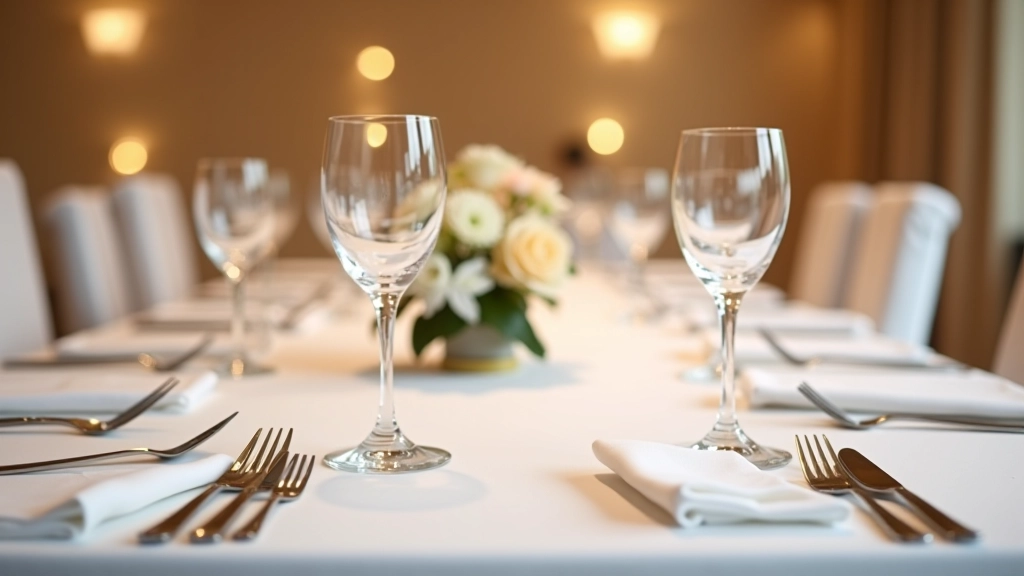
Why Table Setting Matters
Your guests notice everything. The moment they sit down, they're taking in the napkin fold, the placement of silverware, the way glasses catch the light. It's not pretentious—it's thoughtful. A well-set table says you've prepared, you care about the experience, and you respect your guests' time.
We're going to walk through the essentials. You don't need to memorize 47 rules or spend hours folding napkins into swans. Just the fundamentals that actually matter, and the techniques that make a real difference when guests arrive.
The Foundation: Place Setting Basics
Start with the plate. That's your anchor. Everything radiates from there. On the left, forks. On the right, knives and spoons. It sounds simple because it is—but most people get this wrong by trying to overthink it.
Here's what you actually need to know: place the dinner fork on the left side, about an inch from the plate. To its left goes the salad fork (smaller one). On the right, the dinner knife goes closest to the plate, blade facing inward. Next to it, the spoon. That's it. You've got the framework.
The bread plate goes above and to the left of the dinner plate. The water glass sits above the knife. If you're serving wine, that glass goes to the right of the water glass. Napkin on the plate, folded simply—no origami required.
Napkin Folding That Actually Looks Good
Forget the complicated folds. A simple triangle or rectangle looks more sophisticated than something that took 10 minutes to create. It's the difference between elegant and trying too hard.
The triangle fold: Start with your napkin flat. Fold it in half diagonally. Fold that in half again. Place it on the plate with the open corners facing toward the guest. Done. Takes 30 seconds, looks intentional.
Or keep it completely flat on the left side of the forks. That's actually the most formal option. Don't overthink this part—your guests won't remember the napkin fold, but they'll remember if the food was cold or the service was rushed.
About Formal Table Settings
Table setting rules vary by region, culture, and event type. The guidelines presented here reflect Western formal dining conventions commonly used for corporate events in Europe. Your specific event may require adjustments based on your guest demographics, cultural context, or venue requirements. When in doubt, consult with your catering team or venue coordinator about their recommendations.
Centerpieces That Work With Conversation
Here's the rule nobody talks about: your centerpiece shouldn't block sightlines. If guests can't see across the table, you've created barriers instead of bringing people together. Keep arrangements under 12 inches tall, or go tall and narrow so people can see over or around them.
What works? A low arrangement of seasonal flowers in a clear vase. Candles (unscented—strong fragrance competes with food). Greenery with a few accent blooms. Small candelabras with tapered candles. Even simple fruit arrangements—pomegranates, lemons, berries in a shallow bowl.
Skip: tall vases that block faces, scented candles (they interfere with food aroma), and anything that requires guests to move it to eat. You want the table to feel open and welcoming, not cluttered.
Lighting and Color Coordination
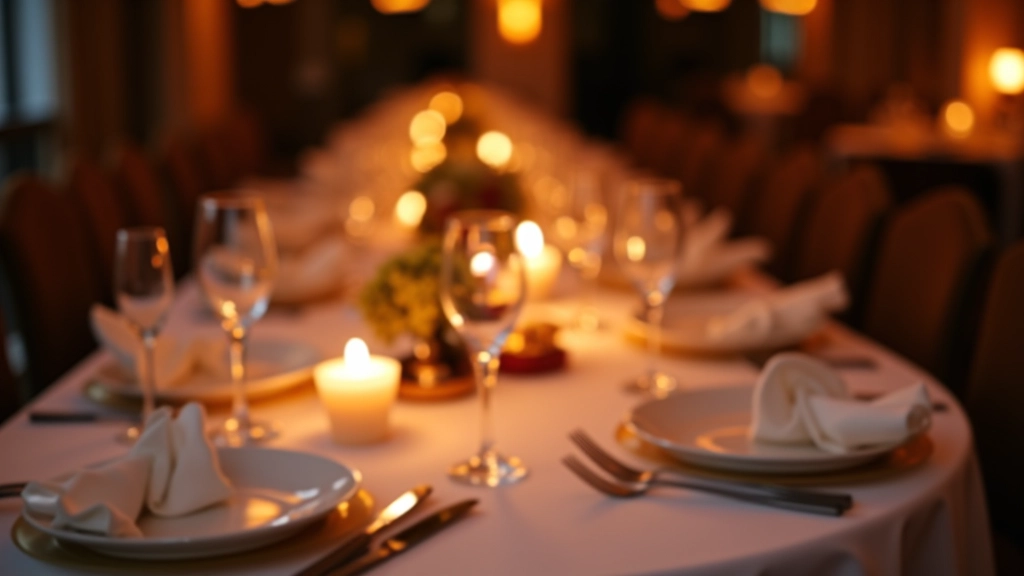
Candlelight changes everything. It softens shadows, makes everyone look better, and creates intimacy. If you're hosting a corporate dinner, you're not trying to run an operating room—you want atmosphere.
Color matters too, but it doesn't have to match perfectly. If your napkins are ivory and your tablecloth is cream, that's cohesive. If your centerpieces pick up the color of your walls or your venue's branding, you've got intentional design. But white and off-white together, or white and pale gray—those combinations work because they feel clean and classic.
Avoid anything too bold unless it's part of your event theme. A burgundy napkin can work beautifully. A neon tablecloth usually doesn't. Think: would this look good in a photograph six months from now?
The Day-Of Setup and Timeline
Don't set the table hours before guests arrive. Set it 45 minutes to an hour before. This keeps napkins crisp, flowers fresh, and water at the right temperature. If you're using ice in water glasses, add that just before guests sit.
For a 7 PM dinner, you'd want the table completely set by 6:15 PM. This gives you a buffer if you notice something's off—a crooked fork, a glass that needs polishing, a centerpiece that needs adjustment. You'll have time to fix it without rushing.
Pro tip: Set one place completely. Check it. Make sure the fork-to-plate distance looks right, the napkin sits well, the glassware gleams. Then replicate that exact setup down the entire table. This consistency is what makes a table look intentional and professional.
Final Details That Make the Difference
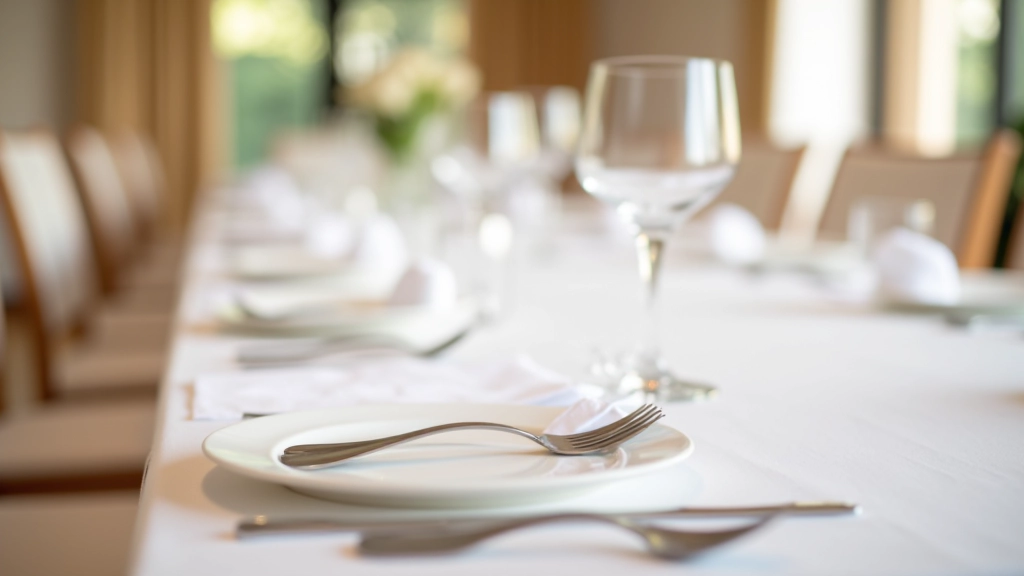
Polish your glassware. This isn't optional. Water glasses and wine glasses should shine. A single smudge stands out under restaurant lighting, and it looks careless. Use a lint-free cloth and do this right before guests arrive.
Check your tablecloth for wrinkles. Iron it if needed, or steam it the day before. A crisp, clean tablecloth is the foundation of everything else. It's worth the effort.
Arrange place cards if you've assigned seating. Position them above the plate or on top of the napkin. Make sure names are spelled correctly and visible from a distance. Nothing's worse than arriving at a formal dinner and having to squint at your place card.
You've Got This
Setting a formal table isn't about memorizing obscure rules or impressing people with your knowledge of fine dining. It's about creating an environment where your guests feel welcomed and respected. When you get these fundamentals right—proper placement, clean linens, thoughtful centerpieces, good lighting—people relax. They enjoy the meal, the conversation, the experience.
Start simple. Master the basic place setting. Choose centerpieces that don't block sightlines. Set the table an hour before guests arrive. These three things will put you ahead of most events you'll attend.
If you're coordinating a corporate event in Šiauliai and want professional guidance on table setting, centerpiece design, or the full dining experience, we're here to help. It's what we do, and we've learned what actually works.
Get In Touch for Event Planning